Summary
Mustafa Kalaycı Palet trades pallets and rents forklifts in Pinarbasi, Bornova, Izmir. İZVELA built the website, the logo, the banner signage, the vehicle glass application and the forklift labels, and set up the Google Business Profile along with the SEO and GEO groundwork.
Project detail
The need
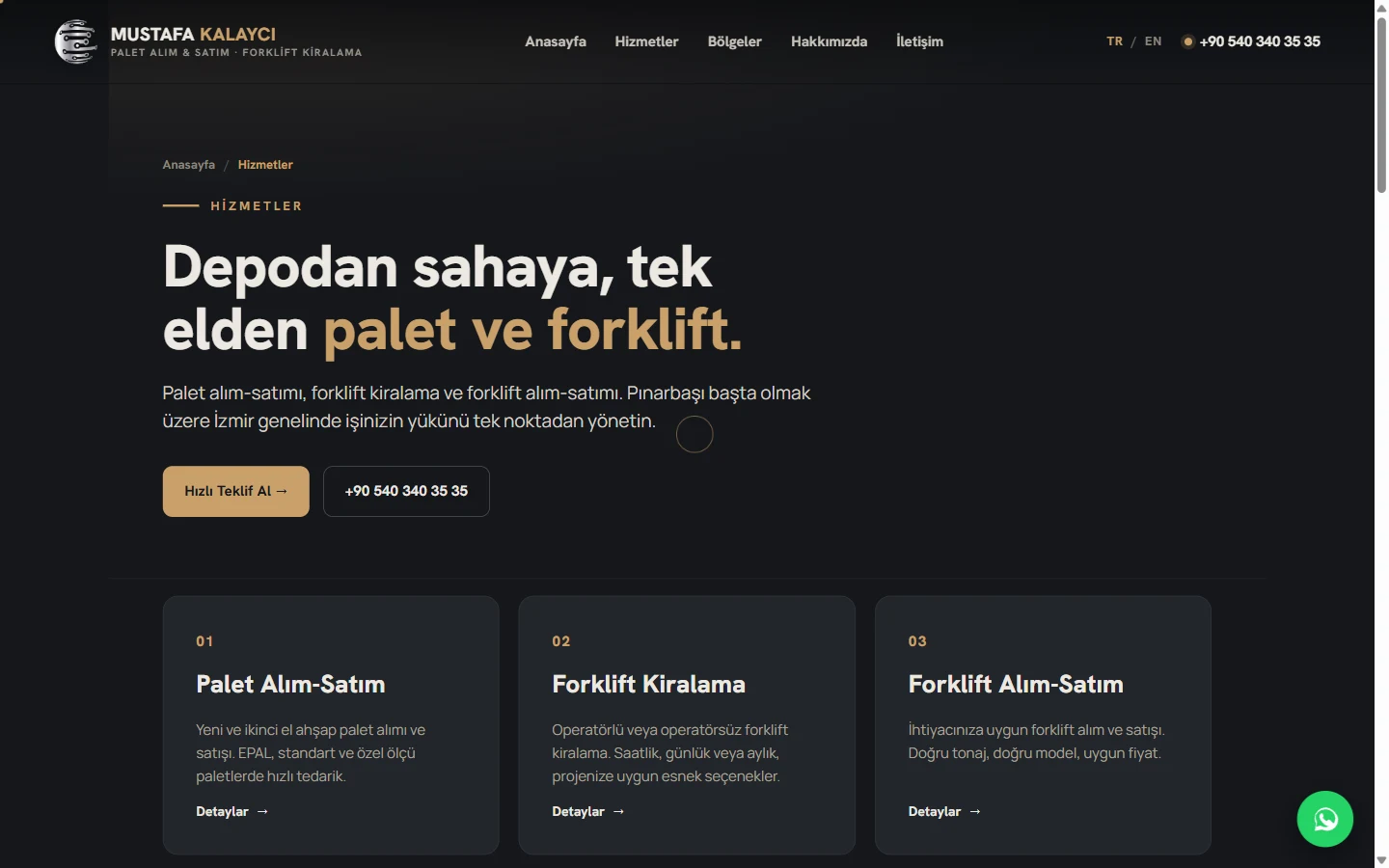
Mustafa Kalaycı runs pallet trading, forklift rental and forklift sales from Pinarbasi across all of Izmir. The field side is strong and customers have long arrived by phone and word of mouth. What they asked of us was to give that strength an equal footing online. To come up in front of someone searching “forklift rental Izmir”, and to put that person through to WhatsApp within seconds. Tone was the second expectation. They wanted a modern storefront that carries the seriousness of the work on site, not a catalog-style page listing products one under another. The work did not stay on screen either. They also asked us for a logo, banner signage across the facade and one-way vision film on the glass. Setting up the Google Business listing from scratch went on the same list.
The approach
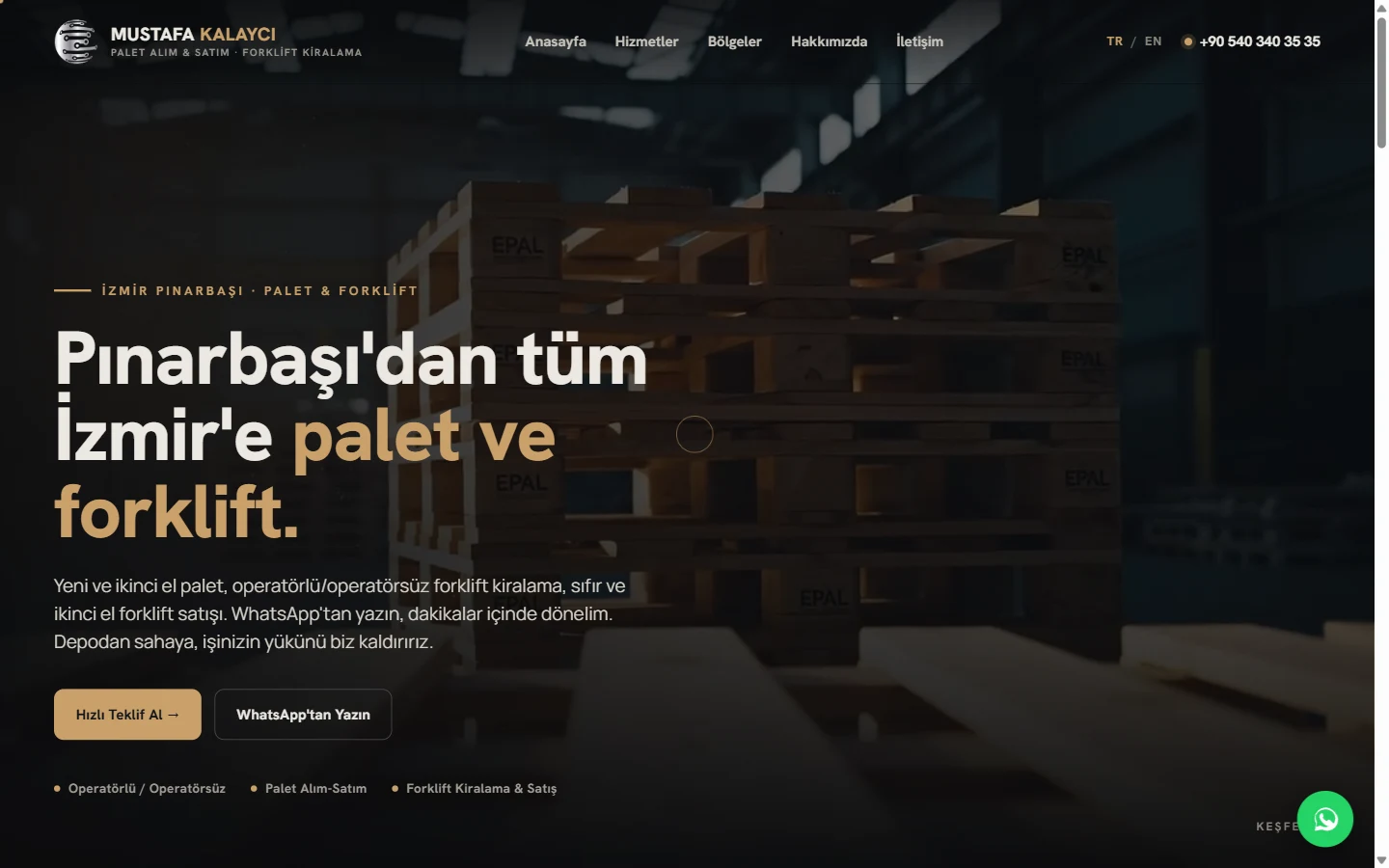
The design language was built from the sector's own texture. Pallet-wood tones on an anthracite-dark stage. The site opens with a cinematic video loop of warehouse and forklift footage, and as the page flows, a three-part scroll story we called "The Birth of a Pallet" plays through the process. No invented numbers or statistics anywhere. Everything is written from the business's real service scope (new/second-hand pallets, operated/unoperated rental, diesel/LPG/electric forklifts). The same identity carried over to the field. The logo was drawn to stay readable from a distance and to hold up in a single colour, because the same mark had to work on screen, on the facade sign and on glass.
How we built it
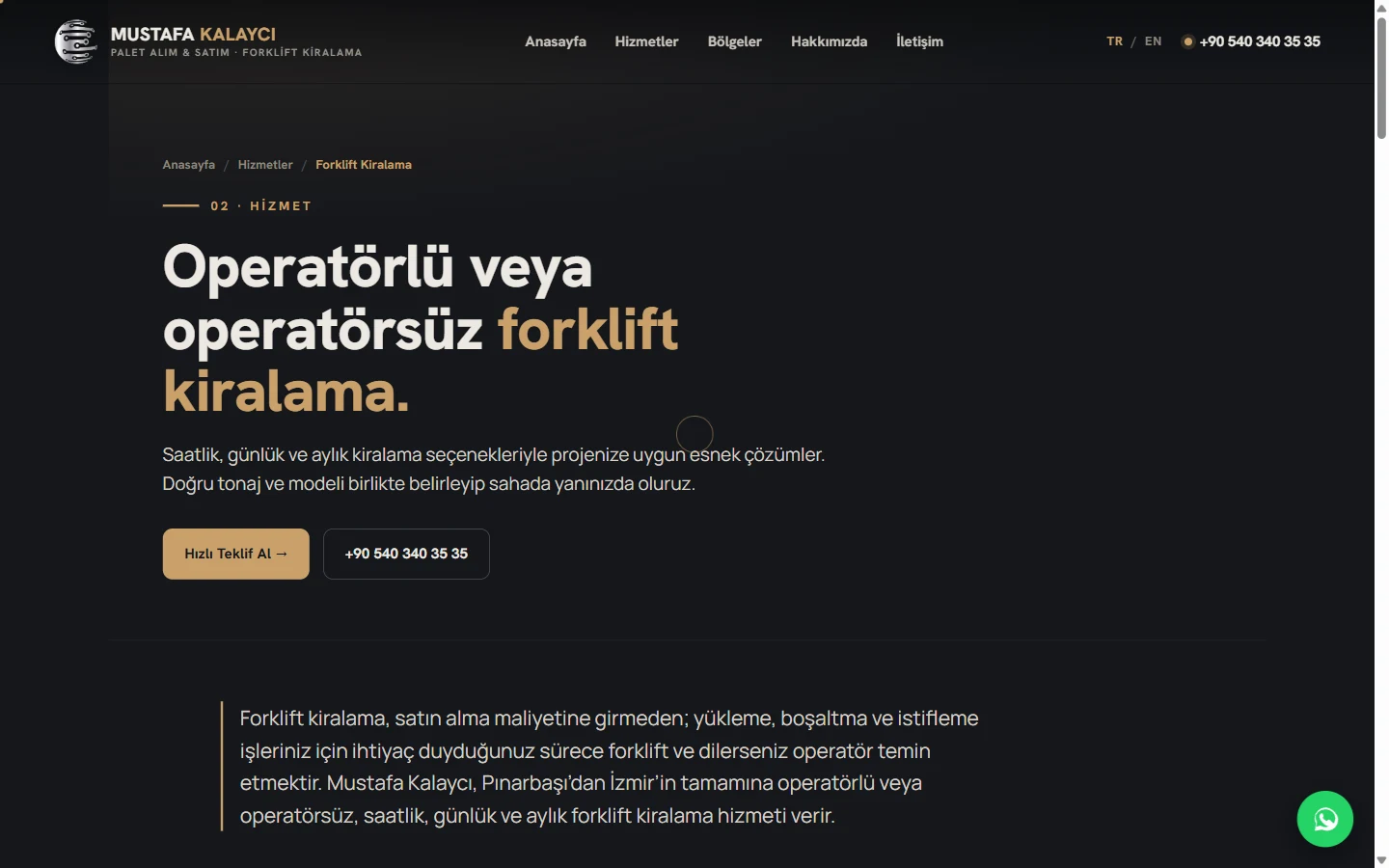
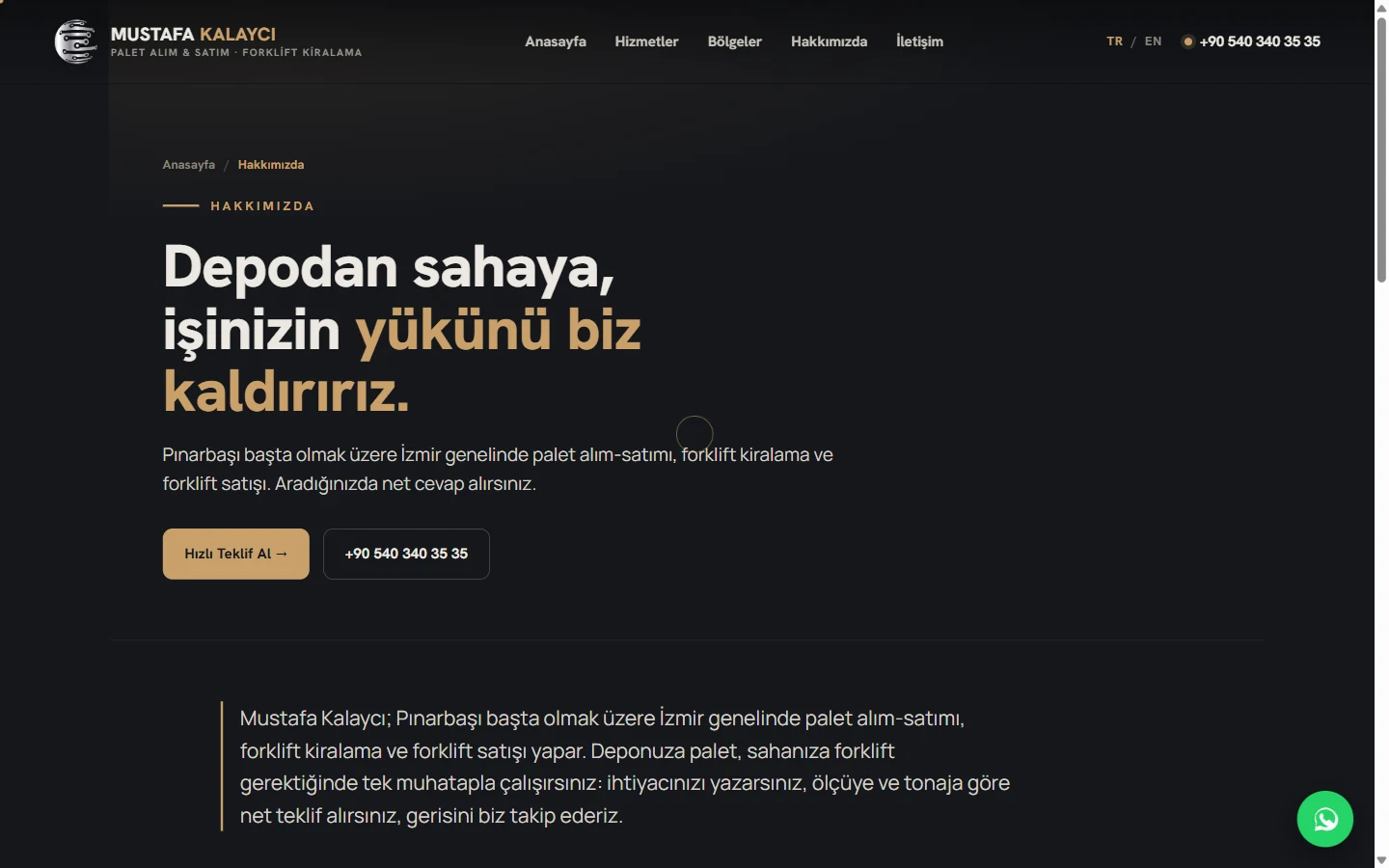
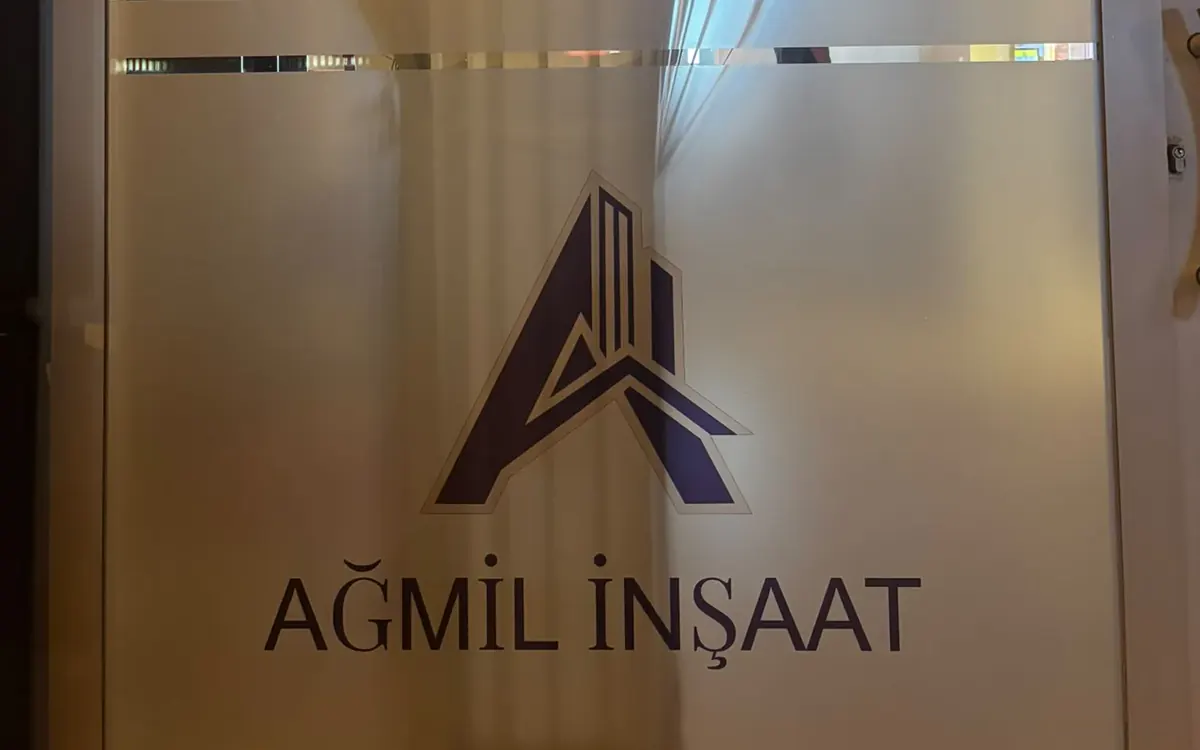
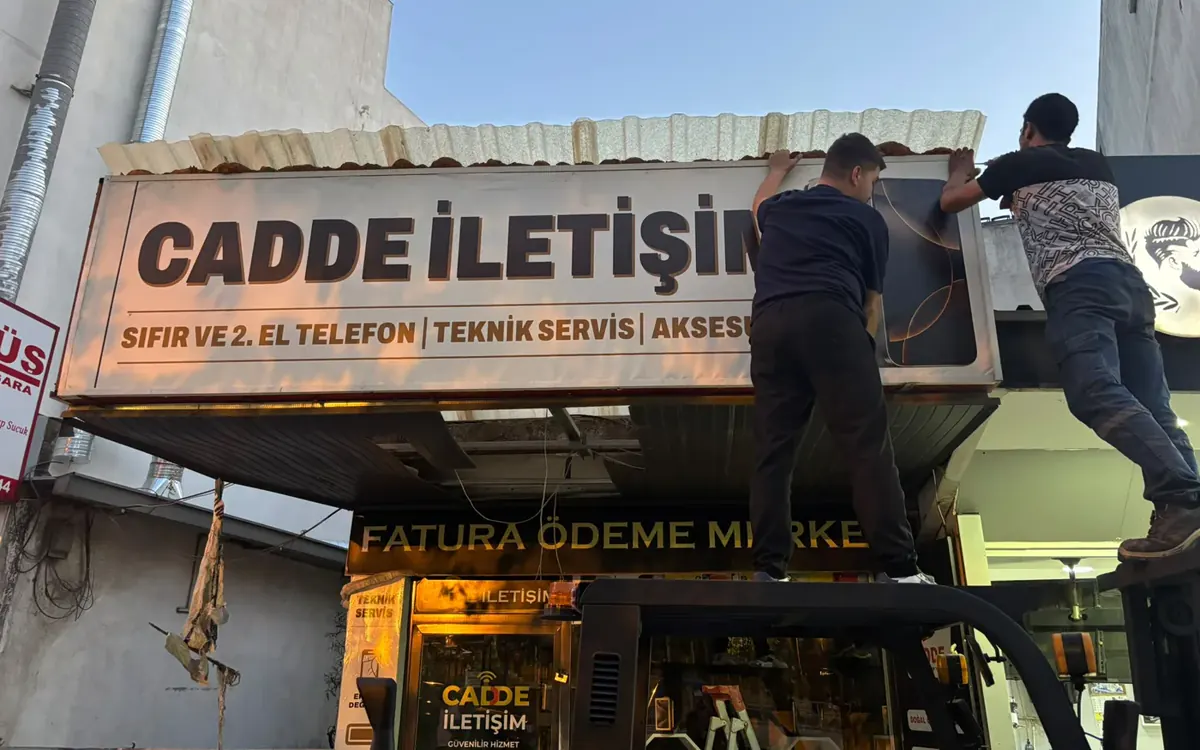
The site was written from scratch, with no ready-made theme. The intro video was brought down to a tenth of its size without giving up quality, so the page opens quickly on a mobile connection too. Two complete versions were prepared, Turkish and English. Business details were marked up in a form both search engines and AI engines can read. Security was kept at its strictest setting. On a phone a fixed bar sits at the bottom of the screen. Calling, WhatsApp and a quote request are one tap away. On the field side, the sign banner was stretched into a metal frame built to its measurements and set flush, so the surface does not ripple in the wind and the edges stay clean. The one-way vision film on the glass shows a full-colour surface from outside while people inside keep their view out, covering 18 square metres of glass in total. Two further banner signs were produced for the front of the premises. The Google Business listing was created from scratch. The name, address and phone were written exactly as they appear on the site, and the category and service areas were set to the real scope of the business.
The result
The site is live on its own domain (mkalaycıpalet.com) and scored full marks for accessibility, quality and search readiness in independent audit tools. Google and Bing registrations are done, and its local-search visibility journey has started. The brand on screen, the sign on the facade and the film on the glass now carry the same mark, so whoever finds the business online and whoever walks past it sees the same brand.
Forklift labels
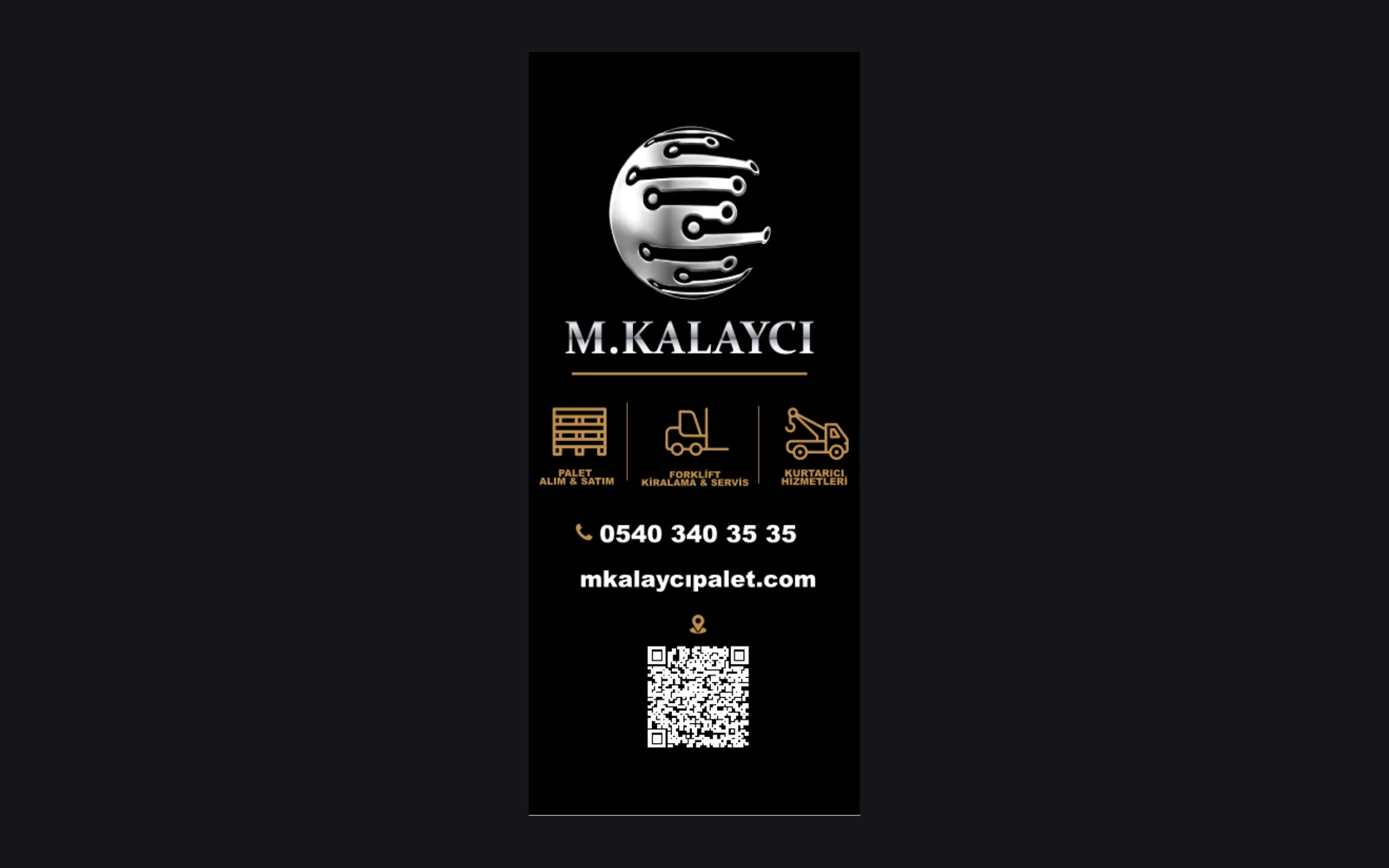
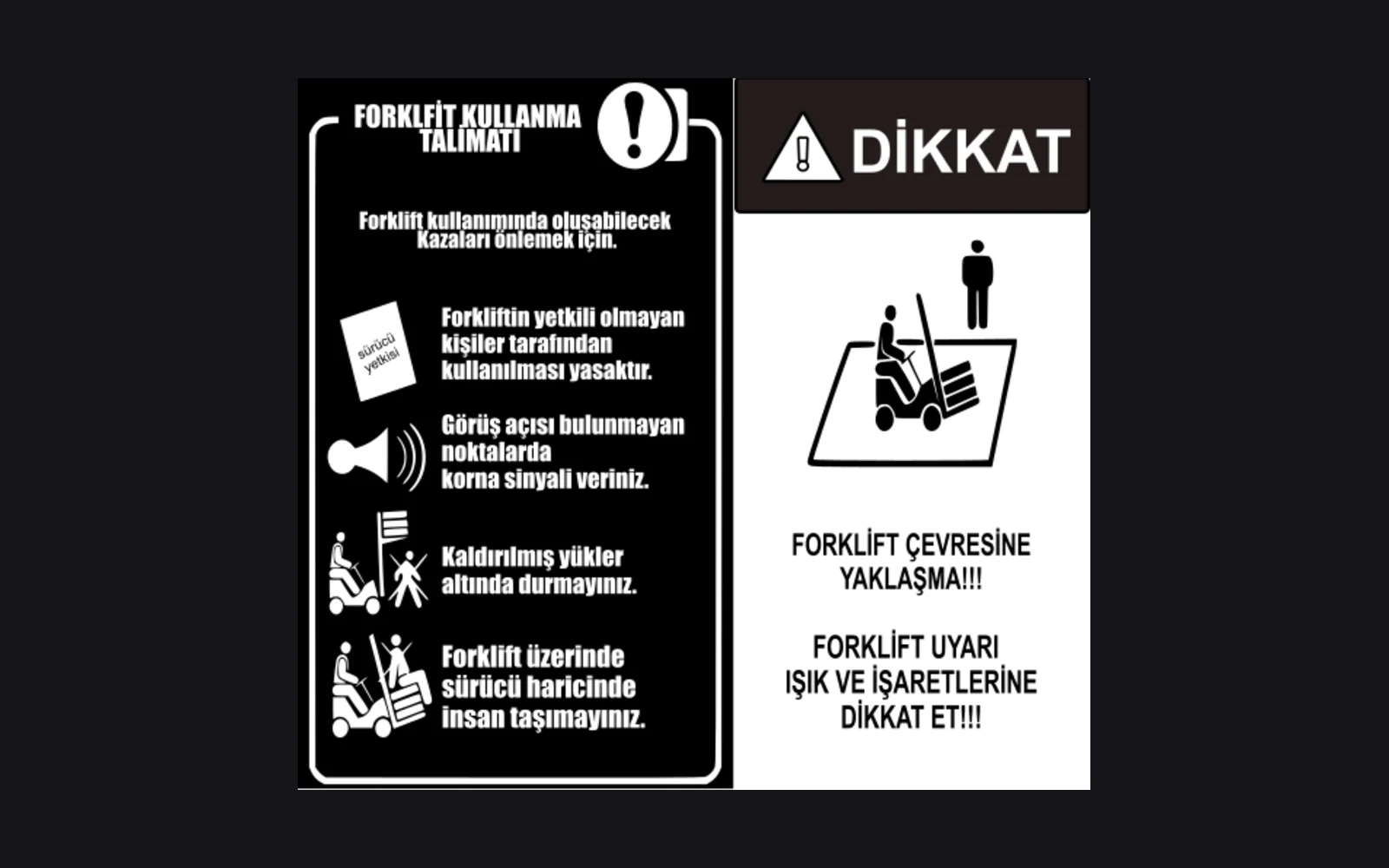
The work moved onto the machines as well. Three vinyl labels were produced for the forklifts. The first is an identity label, 23x10 cm. The silver globe mark sits on black, with a strip below it splitting the three services by their icons, a phone number, the site address and a square code that opens the site. The second is an operating instruction (9x15 cm), the third a warning label (8x16 cm). On those two the brand steps back, because their job is to be read. No unauthorised use, sound the horn at blind corners, do not stand under a raised load, do not carry anyone but the driver. Cut lettering was prepared in two sizes (10x40 and 8x30 cm) for the machine bodies. The square code on the identity label leads to the site we built in the same round, so the machine in the yard and the page on screen are tied together.
How the website was built
The site was written from scratch and the hero section uses a video loop filmed on the company yard. For a business working in an industrial zone the first question a visitor asks is whether the work is really done there, so showing the yard was placed at the centre of the design.
The pages were built in two languages and the security headers were left at the strictest level. The target was a structure that scores full marks in independent auditing tools.
SEO and GEO groundwork
The pages were built so that AI engines can read them as well as search engines. The content is rendered on the server, which means it is readable with JavaScript switched off. Question style headings and paragraphs that open with a definition were chosen for the same reason.
The Search Console and Bing registrations were completed on launch day and the sitemap was sent.
Banner signage and the vehicle application
The banner was stretched over a frame and recessed into it, cut to the measured size. The one way vision film was applied to the glass, so the graphic is visible from outside while the view from inside stays open.
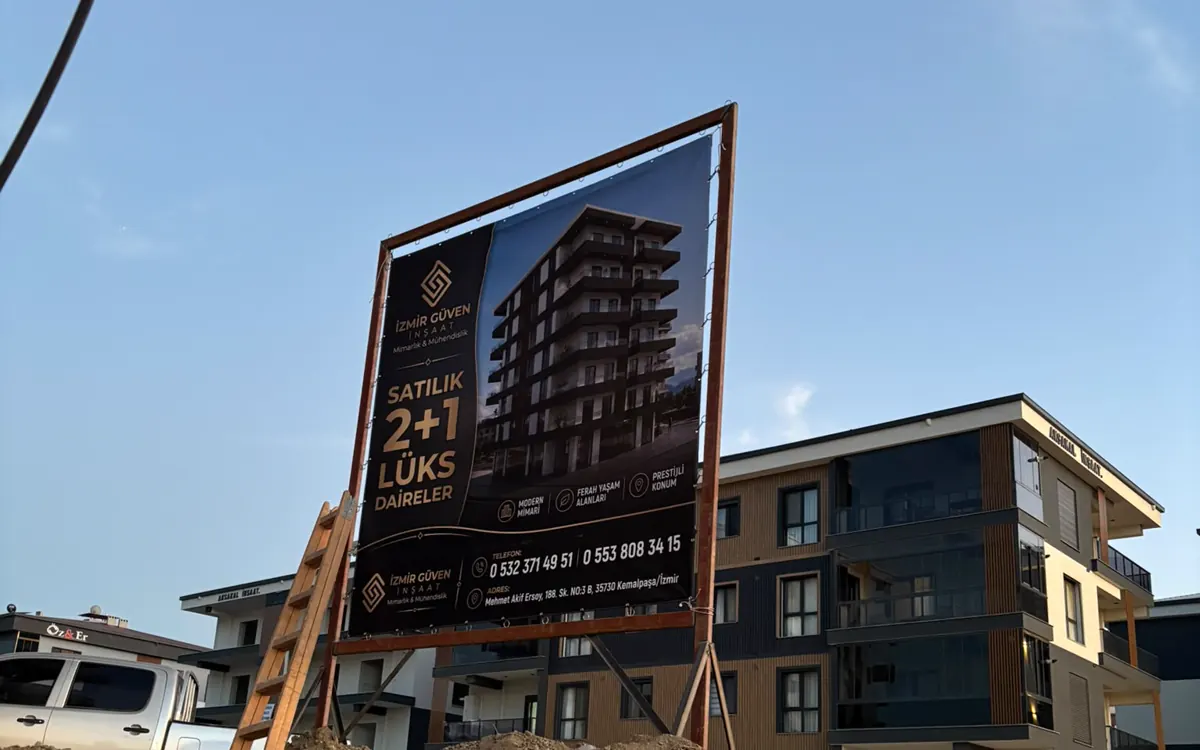
The banner was printed at 2,7 × 2,7 metres while the mounting area is 3 × 3 metres. The difference was left as the allowance needed to stretch it over the frame.
Frequently asked questions about this work in Kemalpasa
What does a website do for a pallet and forklift business?
Callers mostly ask about price and stock. Because the site explains the service items and the contact channels in advance, the phone call gets shorter and the business is not answering the same questions over and over.
How long do applications on vehicles and machines last?
It depends on the type of film. Monomeric film lasts one to two years, polymeric film three to five years, and cast film five years and above. Yard conditions and washing frequency can shorten that period.
Why were the forklift labels designed separately?
The labels carry identity and operating information at the same time. Because the same brand language repeats on the vehicle, on the sign and in print, the business is recognised in the yard as well.