


DIGITAL · KEMALPASA / IZMIR
Business Cards
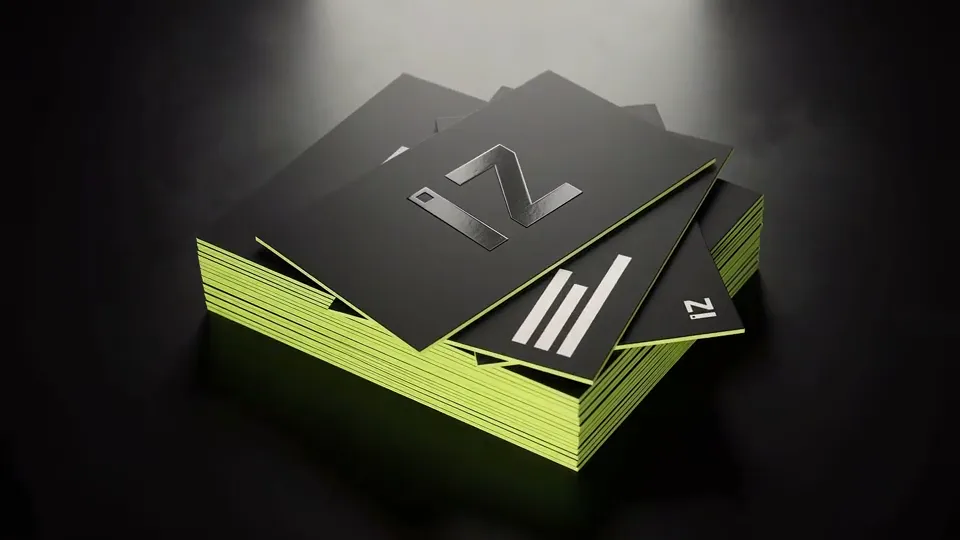
A business card that feels like your brand's quality the moment it's in someone's hand. Design to print, all under one roof.
·
A business card is often a business's first physical point of contact with a person. In an age where everything digital gets consumed and forgotten so quickly, it is the one object that gets held, pocketed, and left on a desk. Cheap paper, a cramped layout, or a generic template all undercut that first impression.
Business cards get the same discipline we bring to websites and QR codes. Typography, use of white space, and paper/print choices are all built around the brand's identity. On request, a custom QR code can be added to the card. Anyone who scans it is taken straight to the website or a digital contact card.
We design the card and follow the print run from start to finish at the print shop we have worked with for years. You do not need to contact a printer yourself, or wrestle with file formats or print quality.
What’s included in Business Cards
- +Business card design tailored to your brand identity (logo, typography, color harmony)
- +Paper and print method recommendations based on intended use
- +Optional custom QR code integration (linking to your website or contact details)
- +Print-ready file plus follow-through on the print run
- +A consistent template across multiple people or departments for corporate sets
How Business Cards works
Brand info
We collect your logo, brand colors, and the details the card needs, such as name, title and contact information.
Design
We prepare a business card design that fits your brand identity and submit it for your approval.
Print prep
We confirm the paper and print method together and prepare the print-ready file.
Delivery
We follow through on the print run and deliver your business cards.
Business Cards questions we are asked
Are business card design and printing priced separately?
No. The design is included in all three packages. Raised gloss on 700 g, raised gloss on 800 g and gold and silver foil on 700 g each come with 1,000 double-sided cards. If you need a different quantity, a different stock or a corporate set for several people, we quote that separately.
How many days does it take to get business cards ready?
The standard package is delivered in 1 week, counted from the day the design is approved. Every change requested at the approval stage moves that start date by the same amount. If a different stock or a special finish is chosen, we write the timeline into the quote.
Can a QR code be added to a business card?
Yes, adding a custom-designed QR code to a business card is a popular option. Scanning it can take someone straight to your website, your contact details, or a digital business card. That QR code can be prepared to match the card's overall design, carrying your logo and colors.
Should I print a small batch of business cards or go for bulk?
It depends on how often you hand them out and how stable your contact information is. Bulk printing lowers the unit cost if your details rarely change, while smaller batches give you more flexibility if they change often. Either way, the design file is kept on file, so reprinting never means redesigning.
What paper weight should we choose?
Weight decides how the card feels in the hand, and it is the detail most businesses think about least. A thin card looks cheap, curls in a pocket and disappears on a desk. A thick card carries weight and reads as quality. There is a limit though, since a very thick card will not go into a wallet and does not get kept. Something above the middle of the range is the right point for most work. Seeing samples is best, so we bring cards in different thicknesses for you to handle. That feel cannot be explained on a screen.
What is the difference between matt, gloss and textured stock?
Gloss stock makes colours vivid and works well with photographic and colourful designs, but it shows fingerprints and cannot be written on with a pen. Matt stock reads calmer and more corporate, and notes can be written on it. That matters in sales and field work, because the other person writes something on the back. Textured stock is the one people notice most, leaving a distinct feel in the hand, and it tends to be chosen in design and architecture. It is also the most expensive.
What should and should not go on a business card?
The card has one job. To let the other person reach you. What belongs on it is the name, the role, the phone number and what you do. A web address is valuable too. The list of what does not belong is longer. A long legal title, several phone numbers, fax alongside landline and mobile, a long slogan and every social media account. The more crowded the card, the less any single piece of information stands out. The mistake we see most often is filling every space. Empty space lets the card breathe and reads as expensive.
What is bleed, and why does it matter?
The press cuts cards from a large sheet and that cut can shift by fractions of a millimetre. Anything sitting close to the edge of the design is therefore at risk. A line run up against the edge looks thick on one side and thin on the other once the cut moves slightly. In the same way, if a background colour is to reach the edge, the design has to extend a little beyond it, otherwise a white strip is left along the end of the card. We work these allowances out. If you already have a design, we check them before it goes to print.
Should the back of the card be left blank?
Both positions can be defended and the answer depends on the work. A blank back reads plainly and leaves room for the other person to write a note, which genuinely gets used in field and sales work. A filled back carries a second message. A service list, a QR code, a map or a short reminder. In work like cafes and salons, leaving a space on the back for an appointment date earns its place. Our only caution is this. Do not fill the back for the sake of filling it. If there is nothing genuinely useful, leave it blank.
How do we choose between an NFC card and a printed one?
They do different jobs and one does not replace the other. A printed card stays in the hand, gets left on a desk, and is remembered visually. An NFC card transfers the details straight to a phone, removing the step of typing a number in. For anyone holding a lot of meetings, using both is the most effective. The printed card is left behind while the NFC card stays in the pocket and is tapped when needed. We prepare the NFC card family as well, and because the design comes from one source the two cards match.
Do we keep the design file afterwards?
You do, delivered print-ready. The practical benefit is this. A business that runs out of cards can walk into another printer at a moment when it cannot reach us and have the same card produced. Businesses that do not hold the file end up having the design redone with every reprint, and the card shifts a little each time. We use the same template for staff changes too, so a new person's card comes out in exactly the same layout as the last.
We print business cards as raised gloss on 700 g, raised gloss on 800 g or gold and silver foil on 700 g. Every package includes the design and 1,000 double-sided cards, delivered in 1 week. Printing is done at the print shop we have worked with for years. Call us or message us on WhatsApp for packages and a quote.
If you want to make sure the card in your hand actually represents your brand, get in touch.